

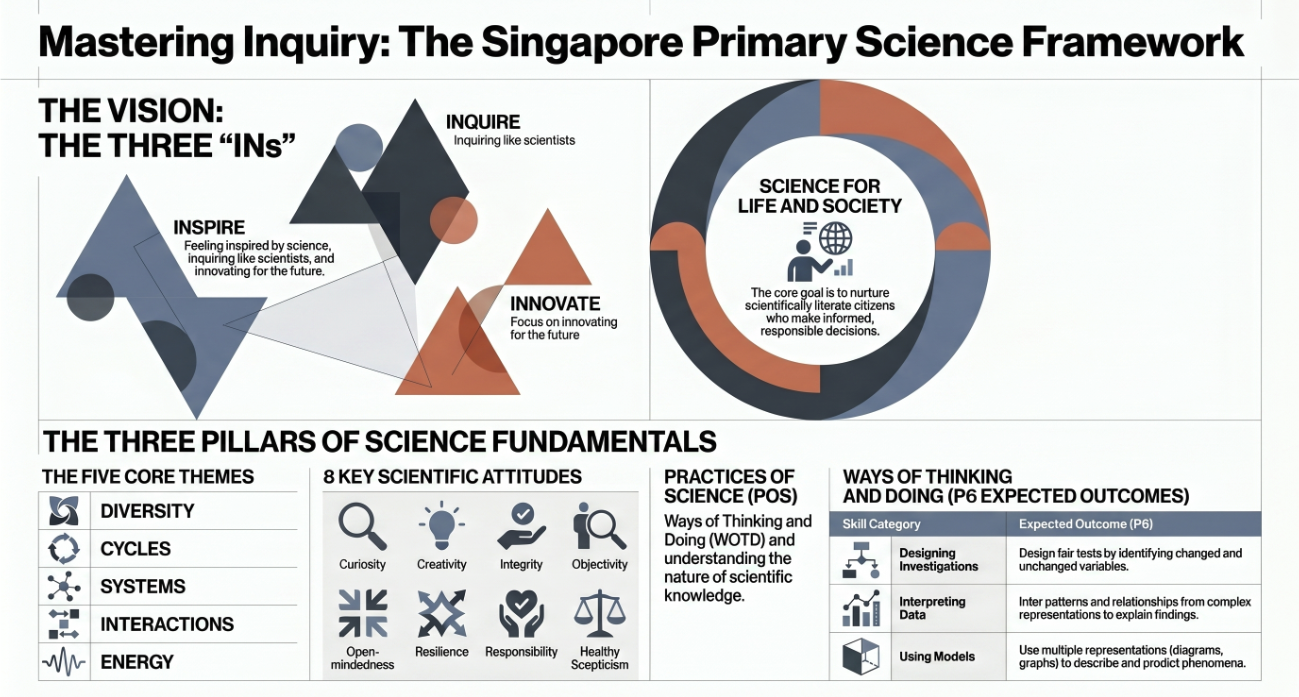
More Than Just Memorising: 5 Key Strategic Focus in Singapore’s New Primary Science Syllabus
Think science class is just about memorizing facts? Think again! Singapore’s latest Primary Science Syllabus is shaking up the classroom. Instead of rigid rote learning, the new framework places "Science for Life and Society" right at its core. Surprisingly, students are now expected to navigate complex ethical dilemmas and socio-scientific issues. This shift proves that modern science education focuses on cultivating strong values and 21st-century competencies, rather than just objective data. It is no longer just about what you know, but how you think!

How to Use the December Holidays to Set Your Child Up for a Strong 2026 Academic Year
The December holidays are the perfect time to help your child step confidently into the 2026 academic year. Use this window to prepare them mentally for the increased rigour ahead, strengthen weak foundations revealed in their end-of-year results, and rebuild confidence before school starts again. And if work or family commitments make it challenging to guide your child consistently, getting expert support from specialists like Essential Education can make all the difference. With the right preparation now, your child can begin 2026 ahead — not catching up.
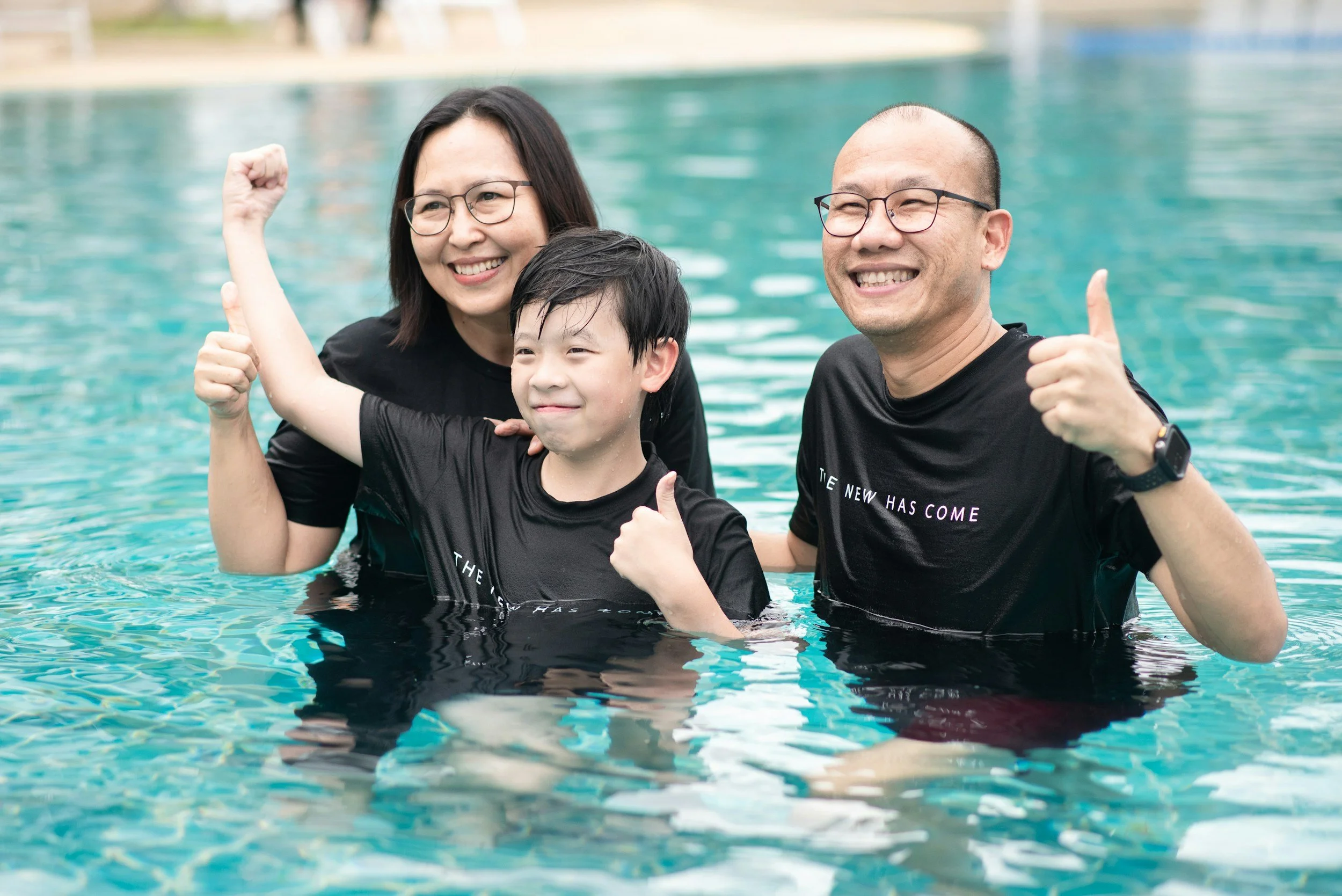
From PSLE to Secondary School Progression: What Parents Need to Know About Supporting Their Child’s Next Step
While waiting to enter secondary school, parents often wonder how best to support their child’s next step. With Full SBB, the new SEC (replacing O-Levels), Integrated Programme, A-Levels, IB, and polytechnic pathways, Singapore’s education system has never been more flexible. Here’s what parents need to know to choose wisely and prepare their child for independence.

Secrets of Essential’s Mathematics Curriculum for PSLE and Primary School Revealed
Our Mathematics tuition curriculum has consistently helped students improve their grades, and we're revealing our secrets to benefit more parents and students. Our approach begins with a thorough analysis of past PSLE papers to focus on key areas. The curriculum is carefully scaffolded to suit all competency levels, ensuring it's challenging yet achievable. We organize practice into "slow" sessions for understanding and "fast" sessions for speed, provide the simplest model solutions, and teach the easiest techniques. This combination promotes confidence, understanding, and exam readiness, helping students excel in Mathematics.
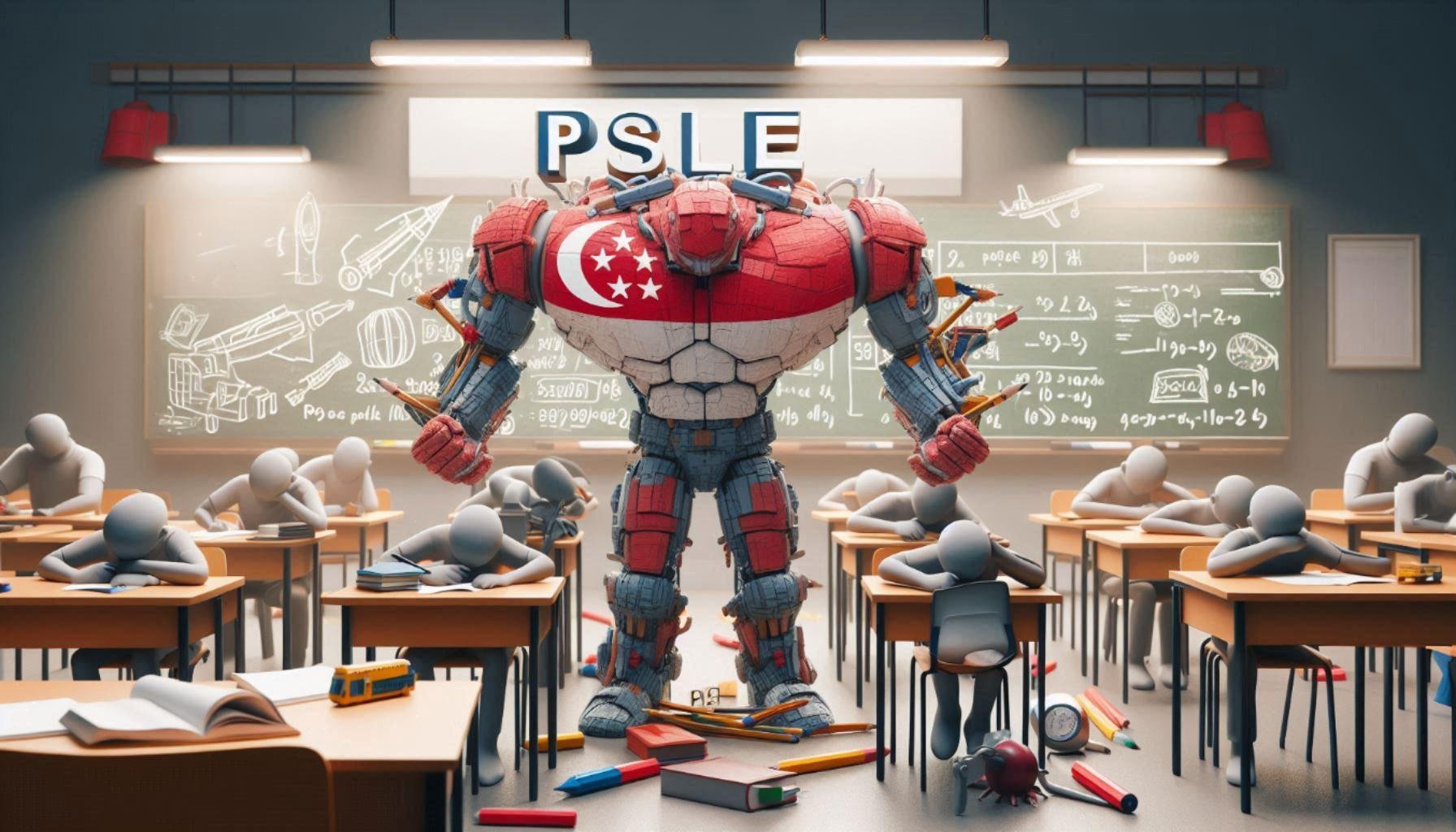
Key Challenges of the Singapore PSLE System
The Singapore PSLE system faces challenges including high stress, a focus on academic excellence at the expense of holistic development, financial strain from additional tuition, and pressure on educators. Addressing these issues is complex, requiring balanced reforms and there is no easy solution. Parents can help by providing emotional support, encouraging a balanced lifestyle, setting realistic expectations, staying involved in their child's learning, managing financial stress, seeking targeted academic help if needed, and promoting a range of interests beyond academics.