
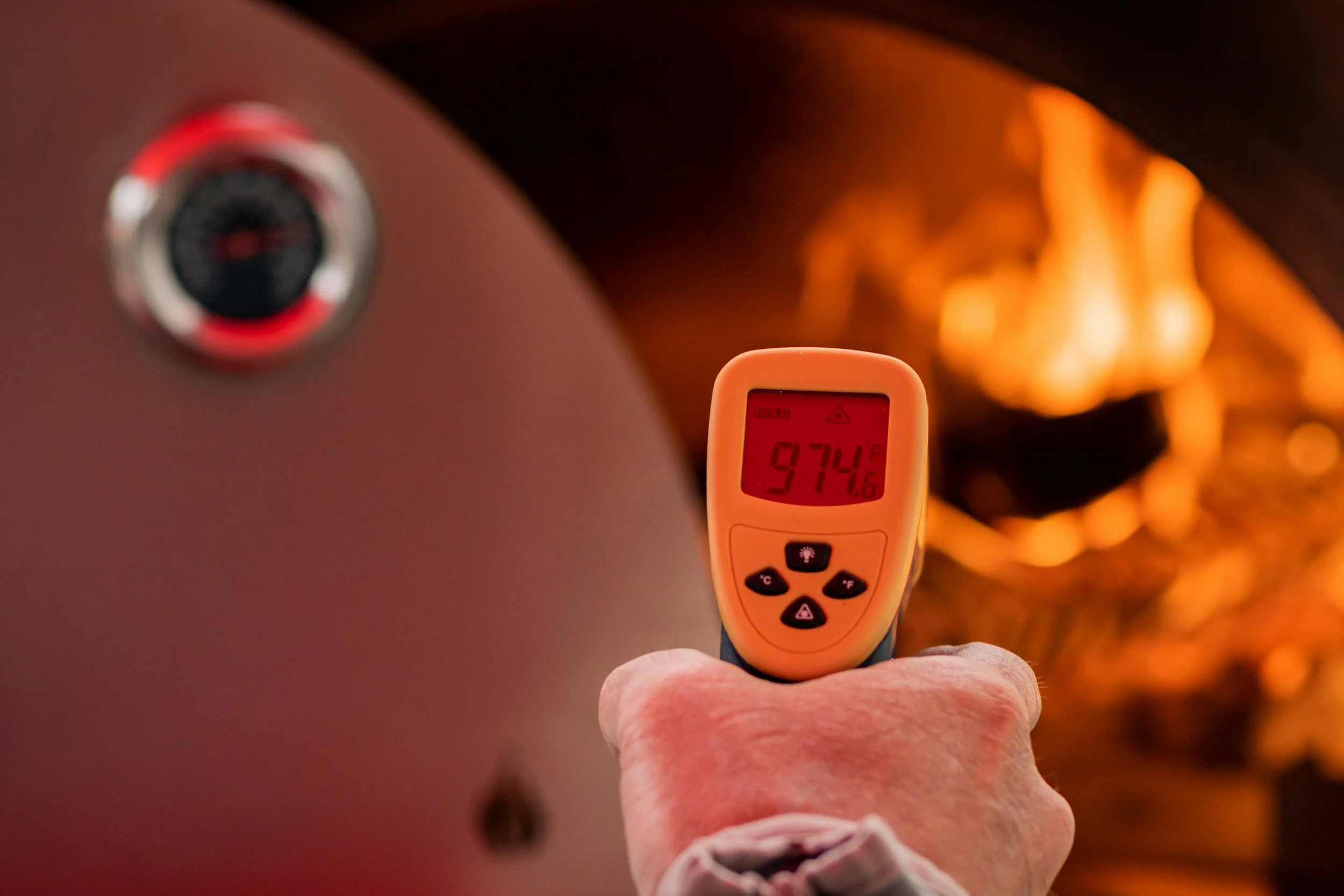
Following the return of recent Weighted Assessment (WA) papers, a parent approached our team visibly perplexed. Her child, who was not enrolled with us at that time, had lost marks on questions where their answers appeared conceptually sound to the untrained eye.
The most striking example came from a straightforward primary science question:
Question: What is temperature?
Student’s Answer: “The temperature of an object is a measurement of its degree of hotness.”
Awarded Mark: 0 / 1
Expected Answer: “Temperature is a measure of how hot or cold something is.”
The student was understandably crestfallen. He had quoted the definition word for word from the notes distributed by his then tuition centre. His parents could not fathom why an answer which was exactly the same as the definition given by the notes was summarily penalised with a red cross.
The New Syllabus Shift: Playing by MOE's Marking Rules
The explanation was straightforward: the student’s answer would have been awarded full marks under the older primary science curriculum. Under the refreshed primary science syllabus (which applies to PSLE from 2026 onwards) , however, the approved textbook standard explicitly defines temperature as:
“Temperature is a measure of how hot or cold something is.”
Primary school teachers in Singapore are tasked with upholding rigorous, standardised marking keys. While one might debate whether penalising phrasing such as “degree of hotness” is overly pedantic for a primary school pupil, our guidance to parents remains pragmatic: if a student wants to secure the marks, they must play strictly to the rules established by the Ministry of Education (MOE).
In an examination hall, semantic technicalities matter. A definition memorised from outdated material, however scientifically defensible in higher levels of education, places an unnecessary handicap on a primary school pupil striving for an AL1 or AL2.
Precision Matters in Primary Science
For any Singapore primary student sitting their science papers today, remember the definitive standard:
“Temperature is a measure of how hot or cold something is.”
Precision in keywords, alignment with current MOE syllabuses, and meticulous exam technique make the difference between a frustrating AL5 and an exceptional AL2 or AL1.
Caution: Outdated Tuition Materials and the Tell-Tale Clue
This incident points to a broader, systemic issue within the supplementary education landscape: a surprising number of tuition centres are still relying on legacy teaching materials.
Using recycled notes creates needless confusion for primary school pupils, who find themselves caught between contradictory expectations from their school teachers and their tuition tutors.
You can quickly evaluate your child’s current learning resources without spending months becoming an expert in PSLE Science Syllabus. Look for one immediate tell-tale sign :
They are still using the term “OEQ”:
Examine their paper headers and revision booklets. Does the tuition provider still refer to Booklet B as “OEQ” (Open-Ended Questions)?
Under current MOE examination terminology, these are formally designated as “SQ” (Structured Questions).
A centre that has neglected to update basic paper terminology is very likely distributing content, questions, and answer keys that lag behind current school expectations.
The Essential Education Standard: Up-to-Date, Well-Written Curriculum
Keeping curriculum materials current requires ongoing review and pedagogical discipline. At Essential Education, our instructional materials are written from the ground up, reviewed continuously against the latest MOE syllabus, and benchmarked directly to school examinations and the PSLE.
Many discerning parents have placed our worksheets and topical notes side by side with materials from long-established, big-brand tuition chains. The distinction is immediate:
Current Syllabus Alignment: No legacy terms, no recycled definitions, and no ambiguous phrasing that risks marks in school assessments.
Clarity of Structure: Complex heuristics in Mathematics and scientific reasoning frameworks (Claim-Evidence-Reasoning) are broken down into clean, manageable steps.
High Quality based on Substance: We believe that top-tier primary education should be accessible, transparent, and grounded in substance rather than inflated branding fees.
Parents choose to switch to Essential Education because our materials provide their children with the exact answers, keywords, and techniques required to secure marks in school.
About Essential Education
Essential Education delivers high-quality, structured Primary Science Tuition, Primary English Tuition and Primary Mathematics Tuition for primary school pupils. We operate with complete pedagogical clarity: our students achieve an AL3 or better, or at least a 1 AL grade improvement within 6 months of enrolment.
An Interesting Side Note on the Official SEAB Syllabus
Given our commitment to curriculum precision and rigorous research, there is an important nuance to this discussion worth highlighting..
In the official MOE / SEAB Primary Science Syllabus document, the curriculum document continues to retain the phrasing:
“Temperature of an object is a measurement of its degree of hotness.”
Yet, the official textbook’s definition is “temperature is a measure of how hot or cold something is.”
When institutional documents present slight variations, our position at Essential Education is unambiguous: you can never go wrong adhering strictly to the official student textbook. School teachers and examiners benchmark their daily instruction and marking rubrics against the student-facing textbook. That standard is what every primary school child should commit to memory.